„The tension in between things is the way I would explain my biggest preoccupation in the studio. How to make paintings be about both the thing they portray and painting itself. How to be both grave and playful. How to allow for anything, while maintaining control. To hold these multiple truths in one still image is something Biala and Tal R do so beautifully, and curiously.“
— Aubrey Levinthal
.
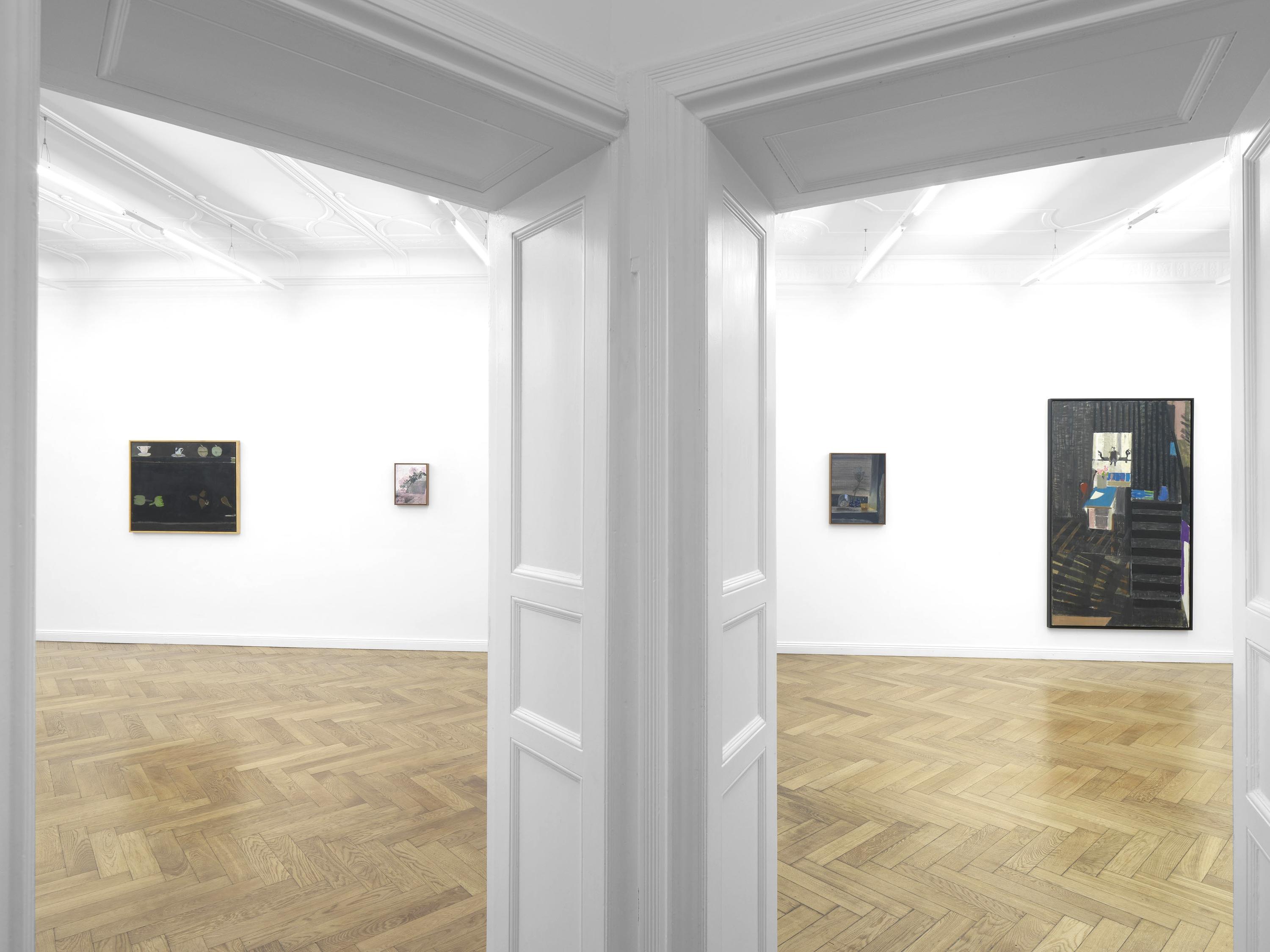
Anlässlich der diesjährigen Berlin Art Week freuen wir uns, eine generationen- und kontinentübergreifende Ausstellung zu präsentieren, in der die jüngsten Arbeiten der US-amerikanischen Künstlerin Aubrey Levinthal (* 1986) in eine direkte visuelle und thematische Beziehung zu Werken von Biala (Janice Biala, 1903—2000) und Tal R (* 1967) gesetzt werden. Beide stellen für Levinthal wesentliche Bezugspunkte und Inspirationsquellen dar. Die Ausstellung verbindet nicht nur eine historische Position des 20. Jahrhunderts mit aktueller Figuration zu einem transnationalen Diskurs über Malerei, sondern schafft auch einen intimen Dialog über die Darstellbarkeit von Vulnerabilität und das Vergehen von Zeit in der modernen Malerei.
Die Lyrikerin Anne Carson beschrieb einst einen irritierenden Traum, in dem sie ihr vertrautes Wohnzimmer nachts »im Schlaf überrascht« und von der »Schlafseite her betreten« hat, was es trotz gewohnter Ordnung vollkommen anders erscheinen ließ. In den Gemälden von Aubrey Levinthal, Biala und Tal R schwingt ein ähnliches Gefühl mit, bei dem das Geheimnis direkt hinter der Alltäglichkeit der Dinge liegt. Die Werke balancieren auf der feinen Trennlinie zwischen dem absolut Vertrauten und dem Fremden und erzeugen eine Spannung zwischen intimer Nähe und rätselhafter Distanz, dargestellt durch geschlossene Augen und blickdicht übermalte Spiegel.
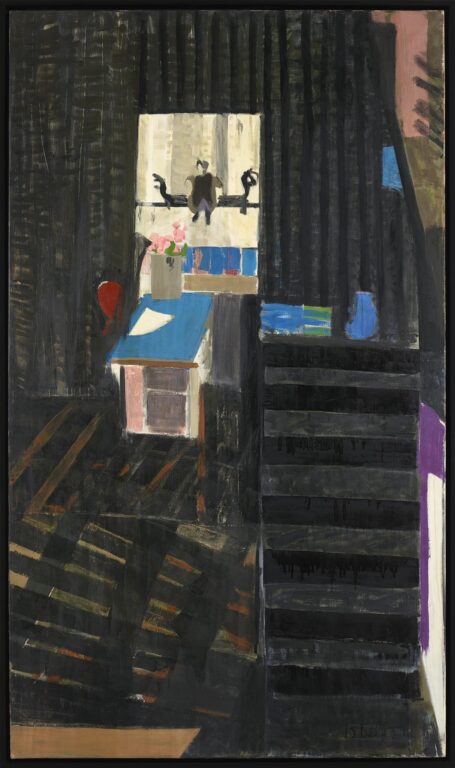
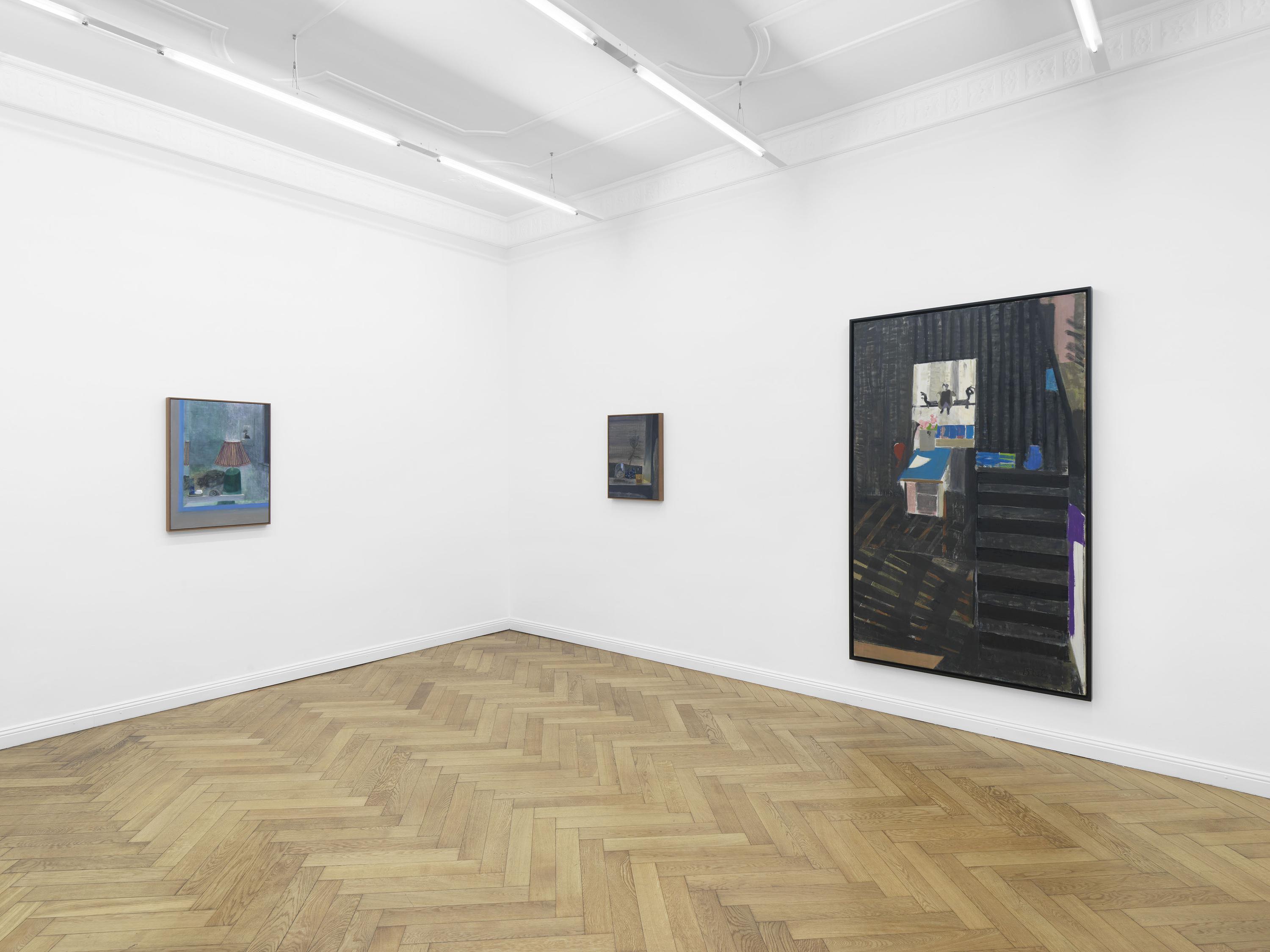
Thematisch dreht sich die Ausstellung um ein Paradoxon: Wie wird das Private universell anwendbar, und wie nähern sich Malerinnen und Maler verschiedener Generationen dieser Herausforderung? Alle drei Künstler*innen teilen die Neigung, scheinbar vertraute Situationen subtil aufzubrechen und zu verfremden. Bei Biala und Levinthal geschieht dies oft durch eine unerwartet gekippte oder verflachte Perspektive in ihren Stillleben und Interieurs. Regale, Fensterbänke, Tische und Fliesenböden ragen steil nach oben und drängen sich förmlich in den Blick—die Objekte wirken in dieser verschobenen Geometrie seltsam schwebend—oder sie kippen weg und verlieren sich in schattigen Leerräumen.
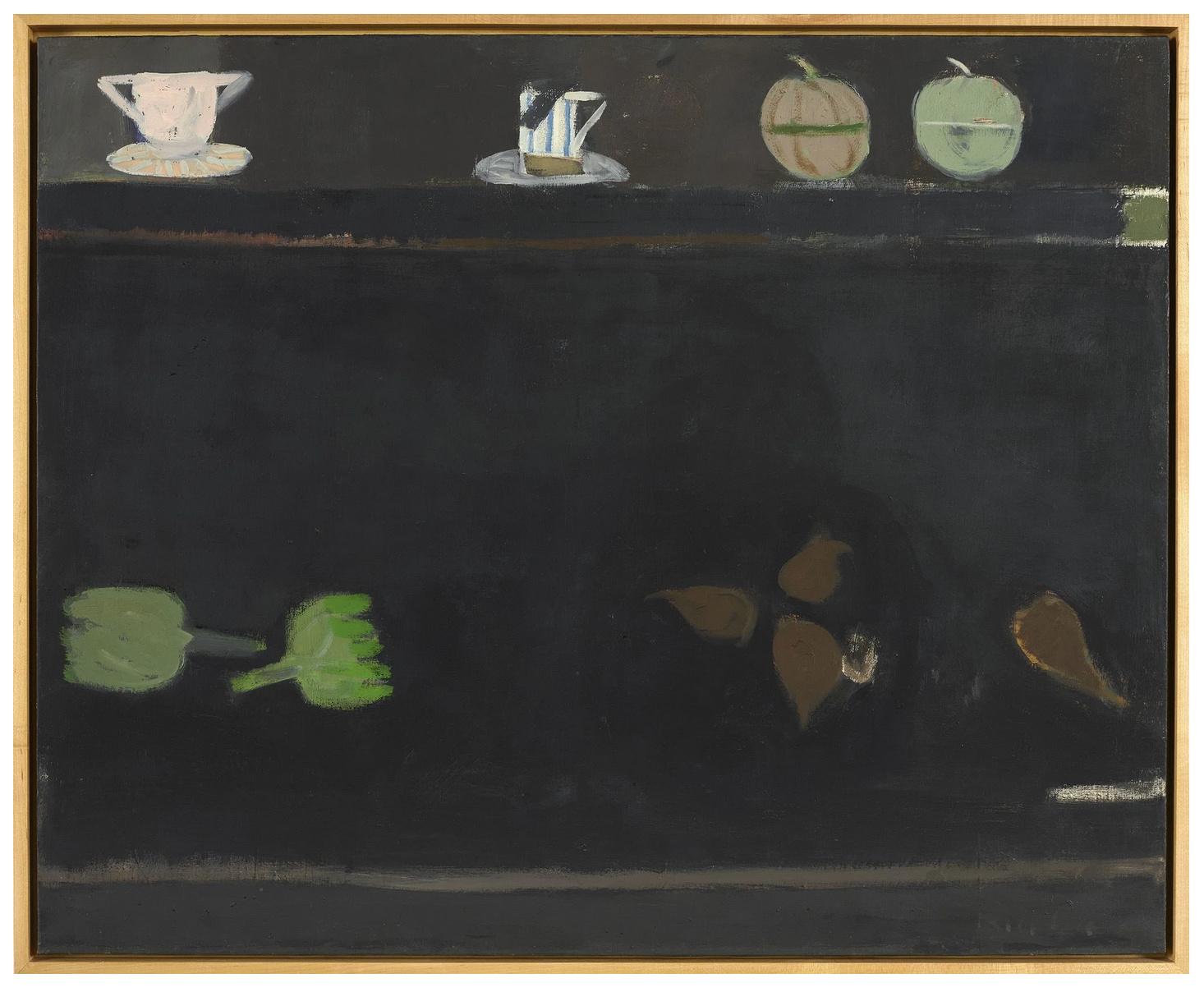
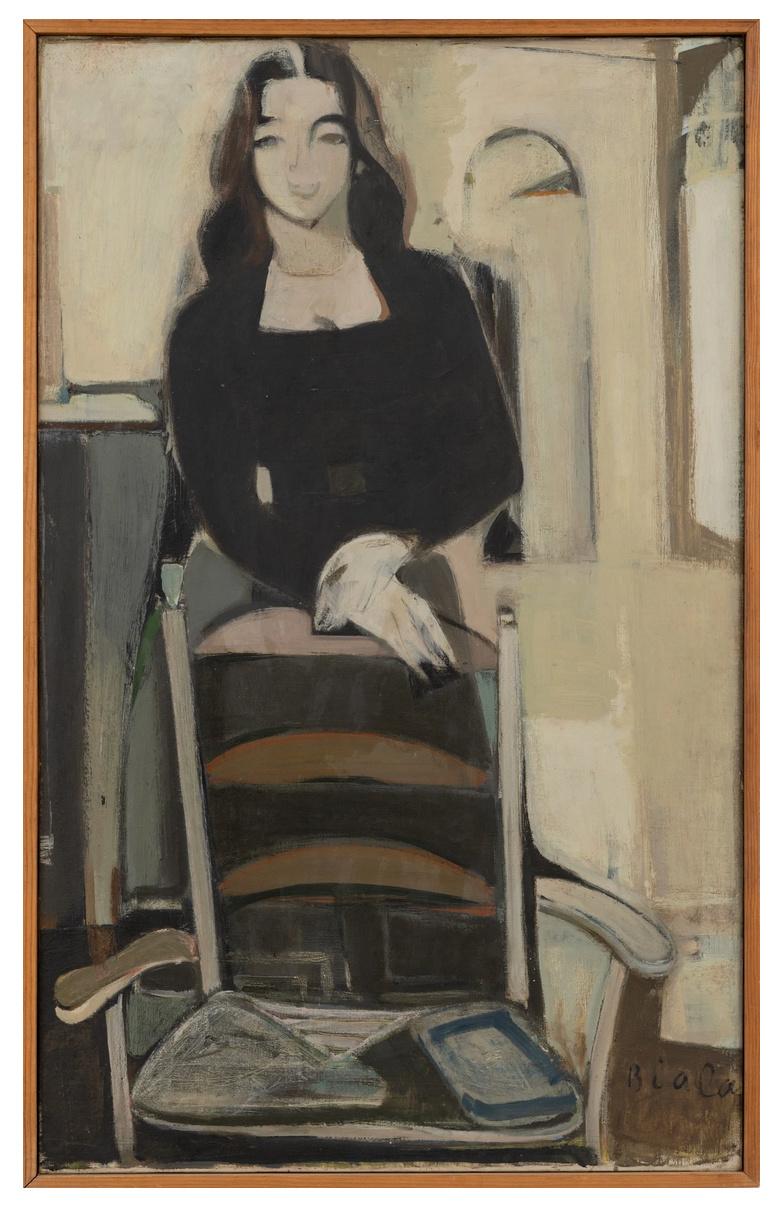
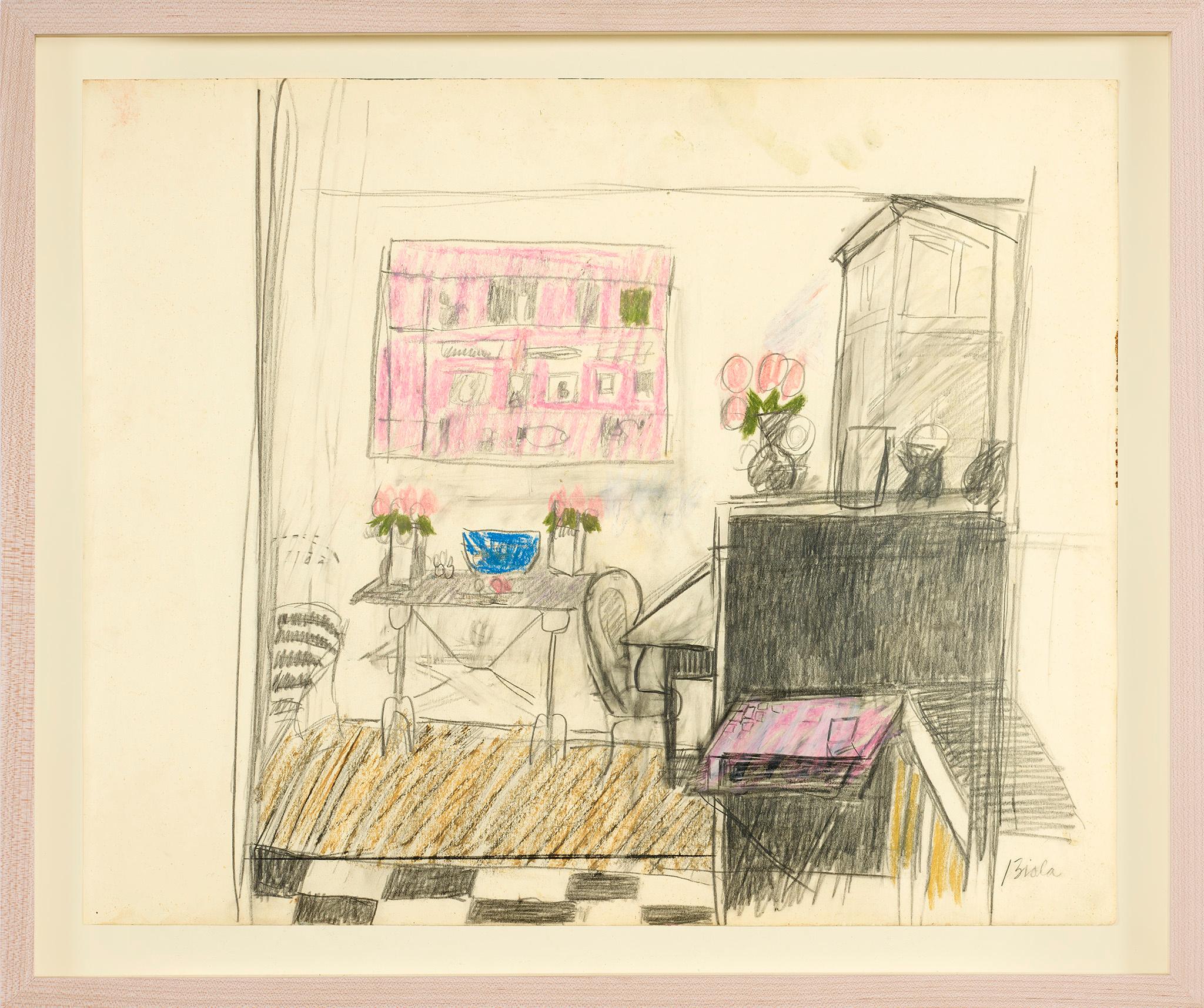
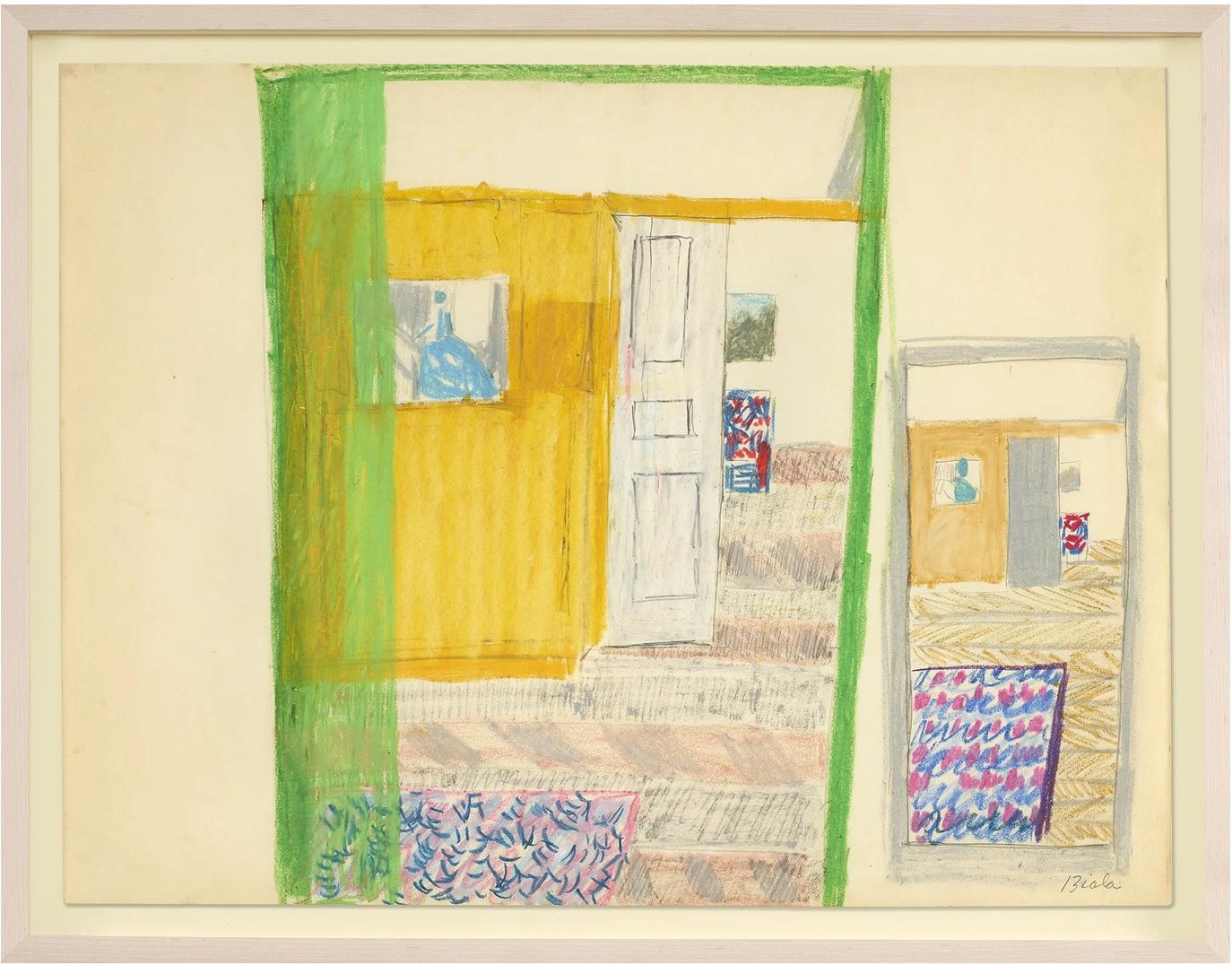
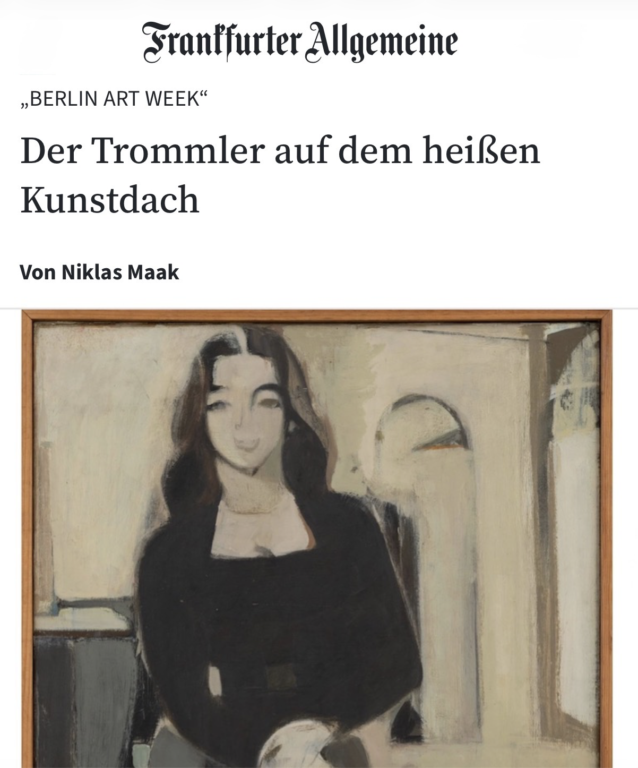
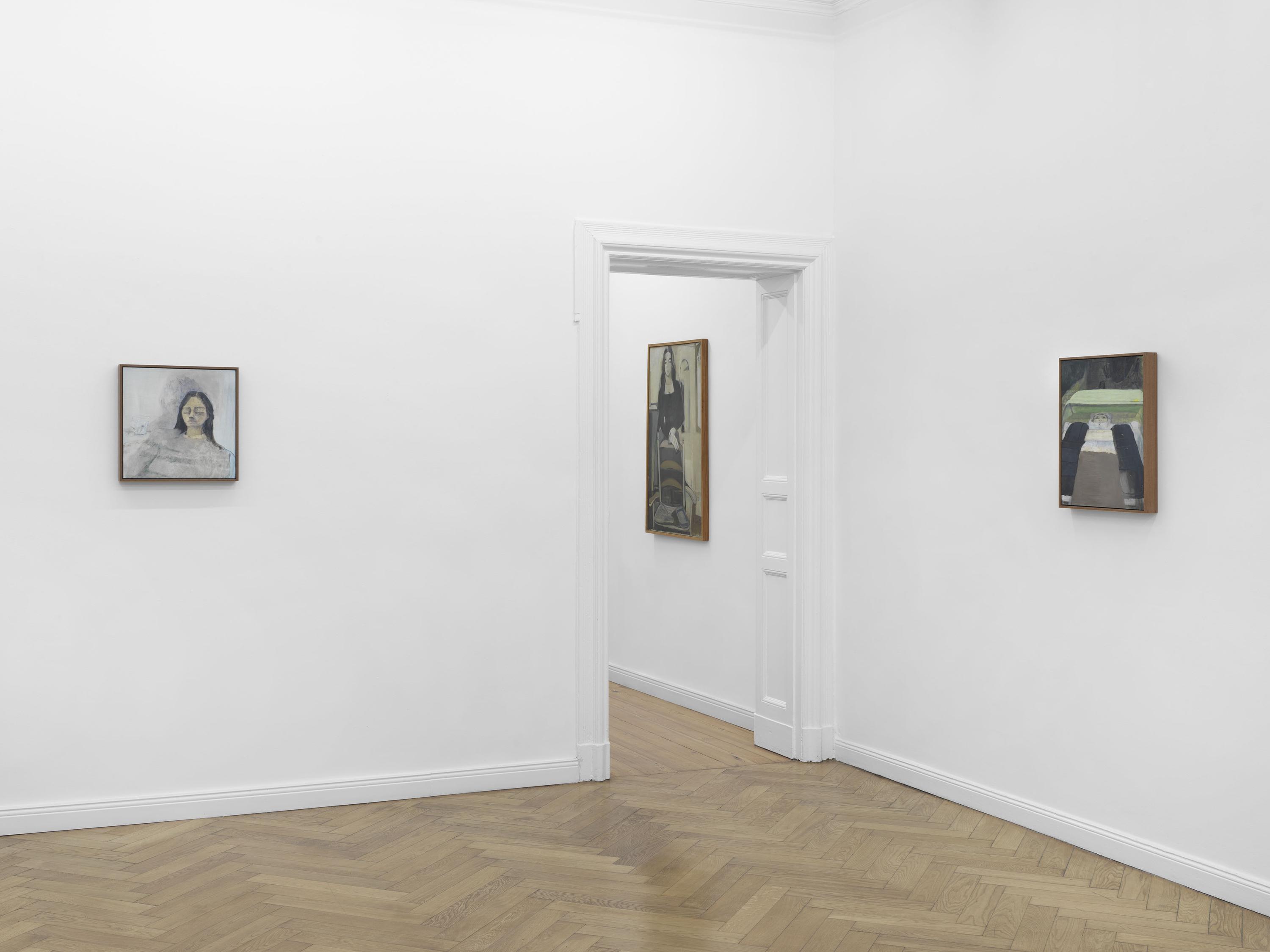
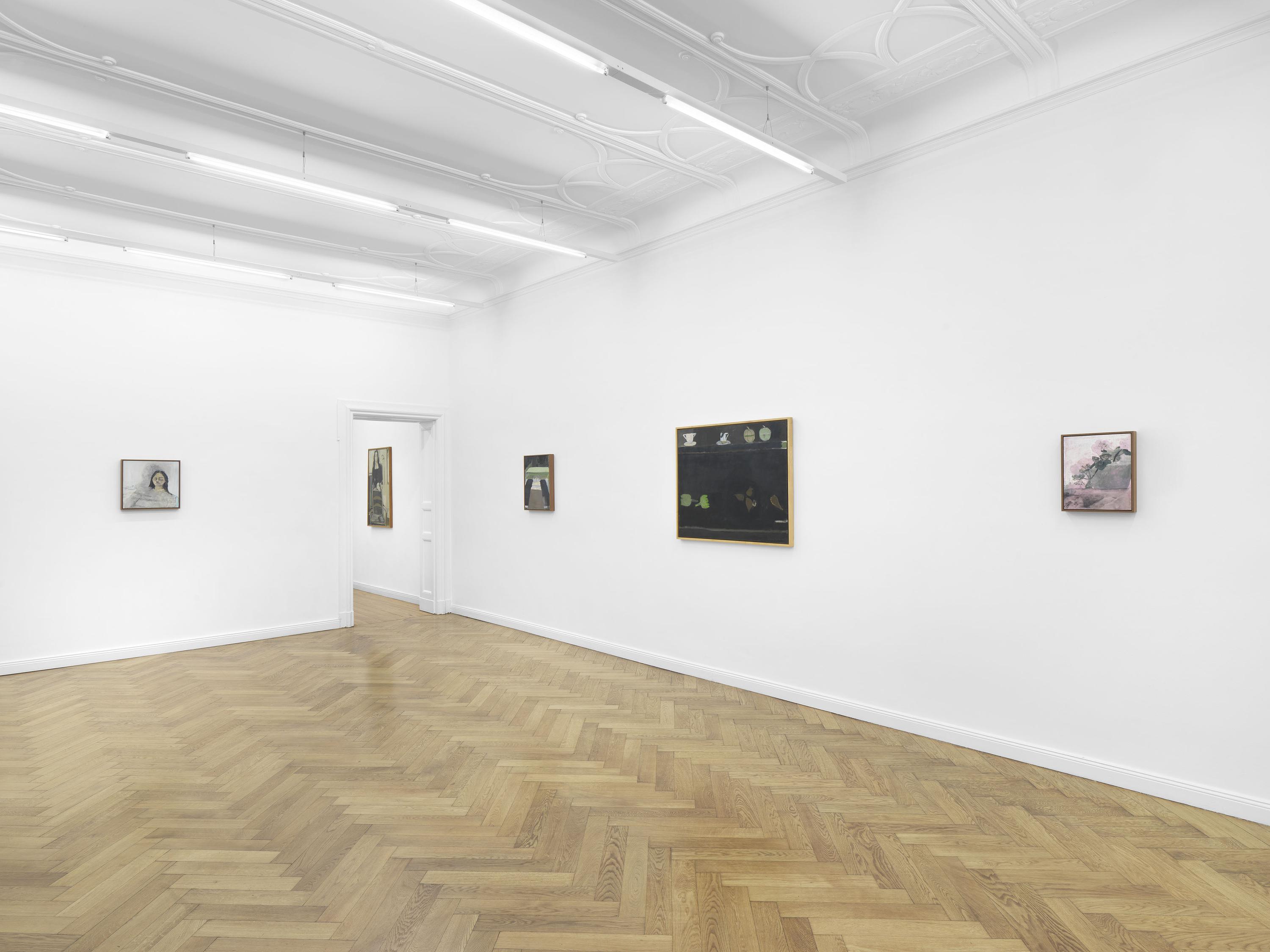
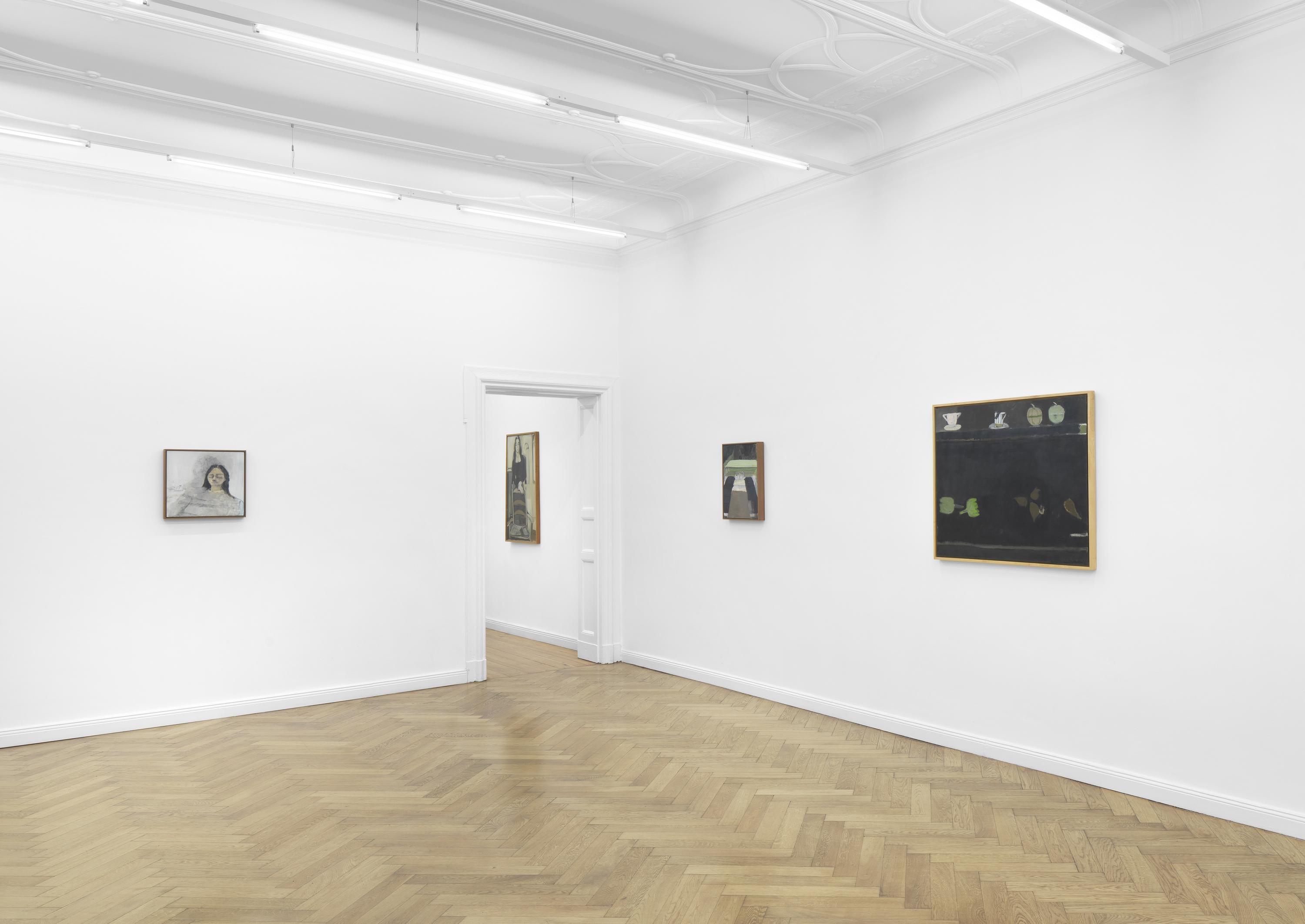
Biala war eine im polnischen Biala Podlaska geborene jüdisch-amerikanische Künstlerin, die dafür gefeiert wurde, einen transatlantischen Dialog zwischen der europäischen Moderne und der New York School des Abstrakten Expressionismus aufzubauen. Ihre Darstellungen von Raum, Licht und Oberfläche wirken gelebt—intim und taktil, aber mit einer sanften Instabilität, die von der Bewegung und Beziehungsdynamik der Dinge in der Welt erzählt: dem Kreislauf der Objekte durch Räume, die von den darin lebenden Menschen aufgehoben, abgestellt und im Haus umherbewegt werden. In ›Black Still Life with Artichokes‹ scheinen Töpfe und Tassen kaum zusammengehalten zu werden, ihre Formen und Farben sind halb im Abdriften begriffen. In ›Standing Figure (Girl with Slatbacked chair)‹ ist die Pose einer Frau frontal und dennoch rätselhaft—Lächeln und Hände stehen am Rande einer spektralen Auflösung.
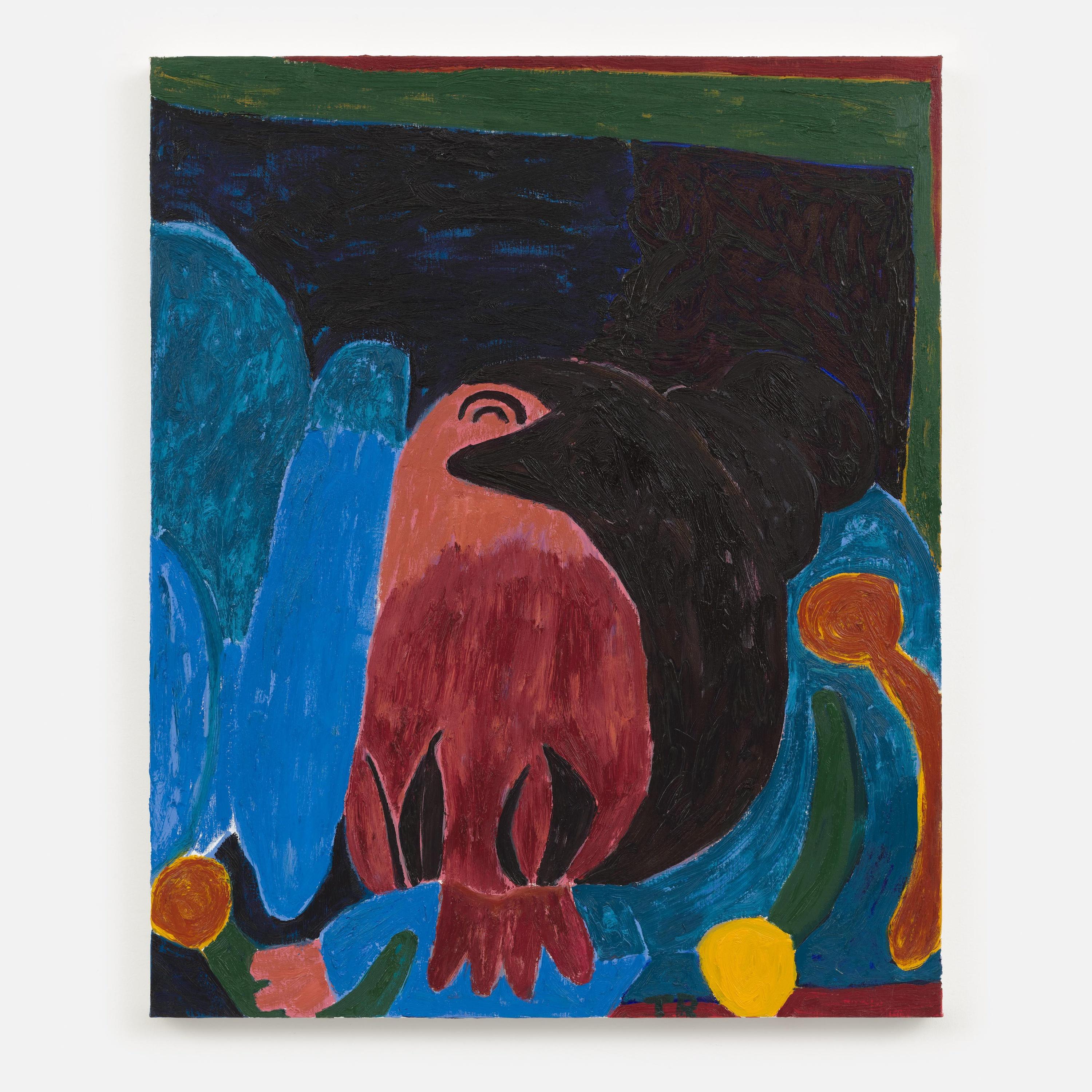
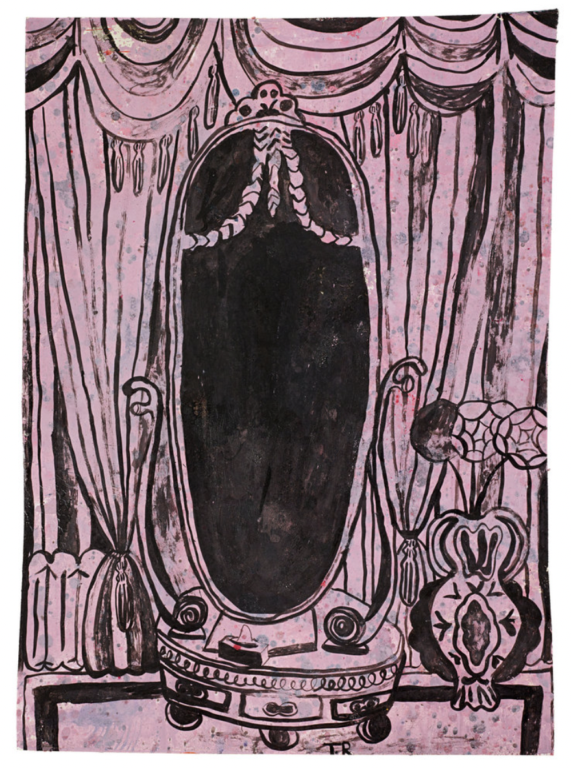
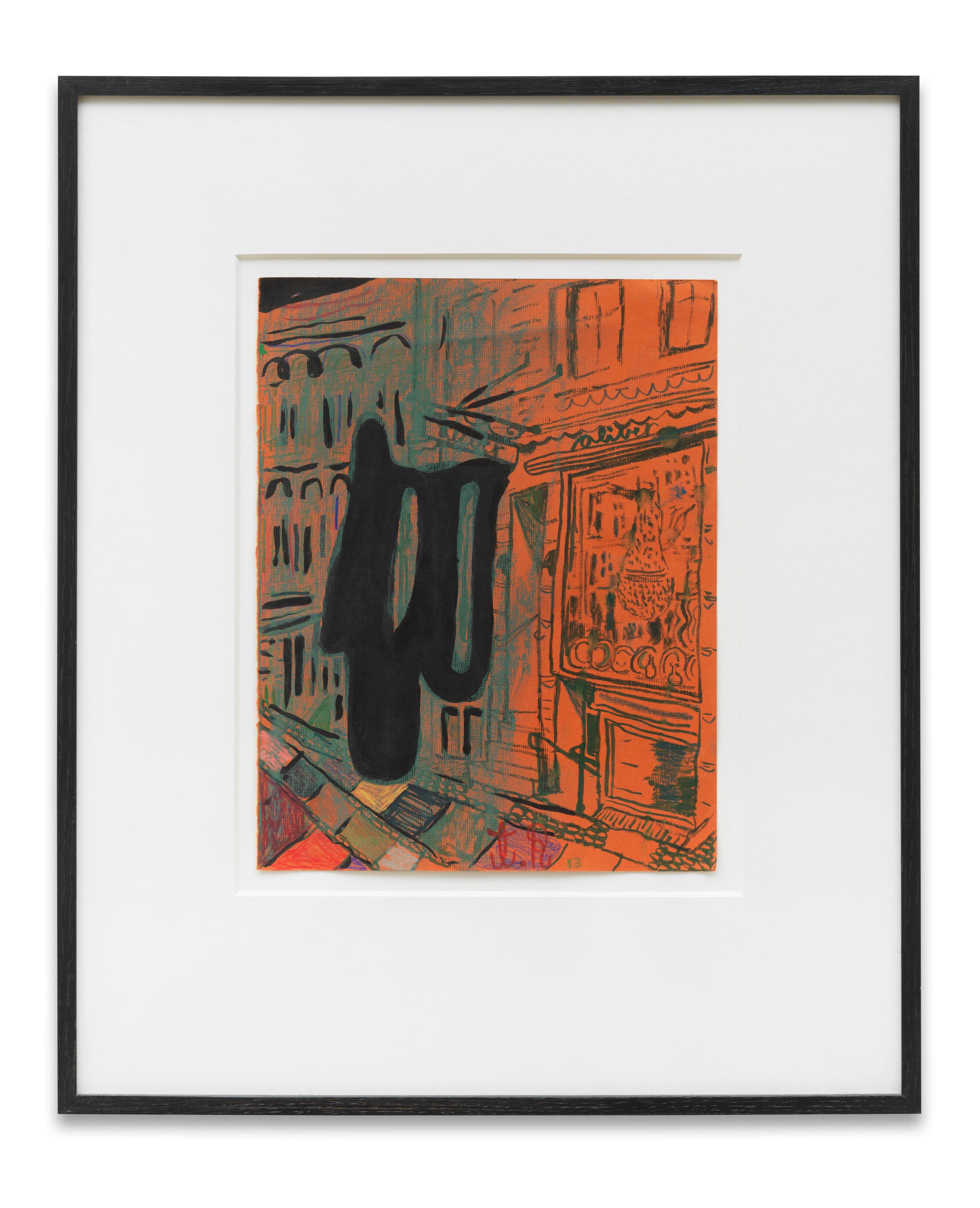
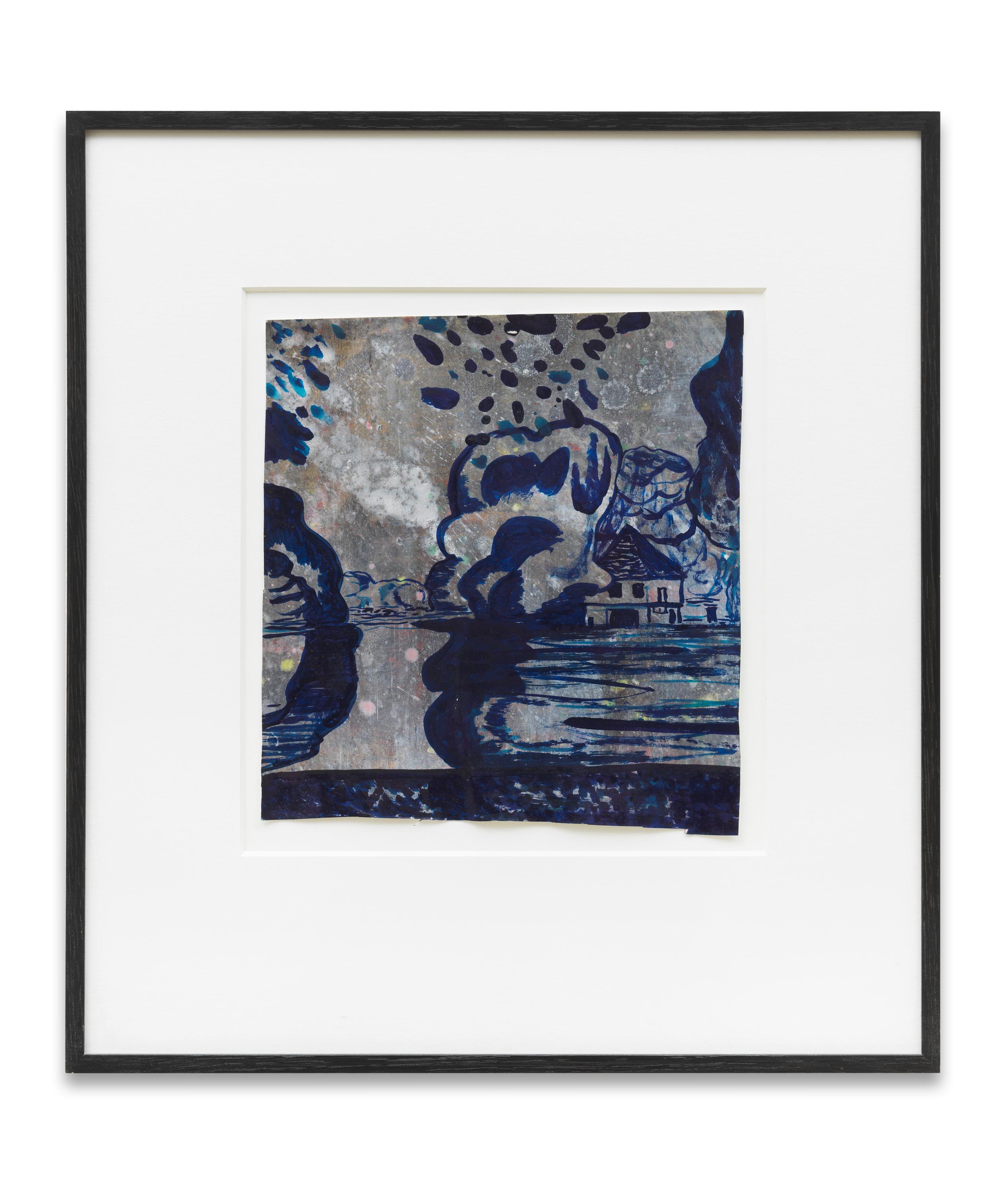
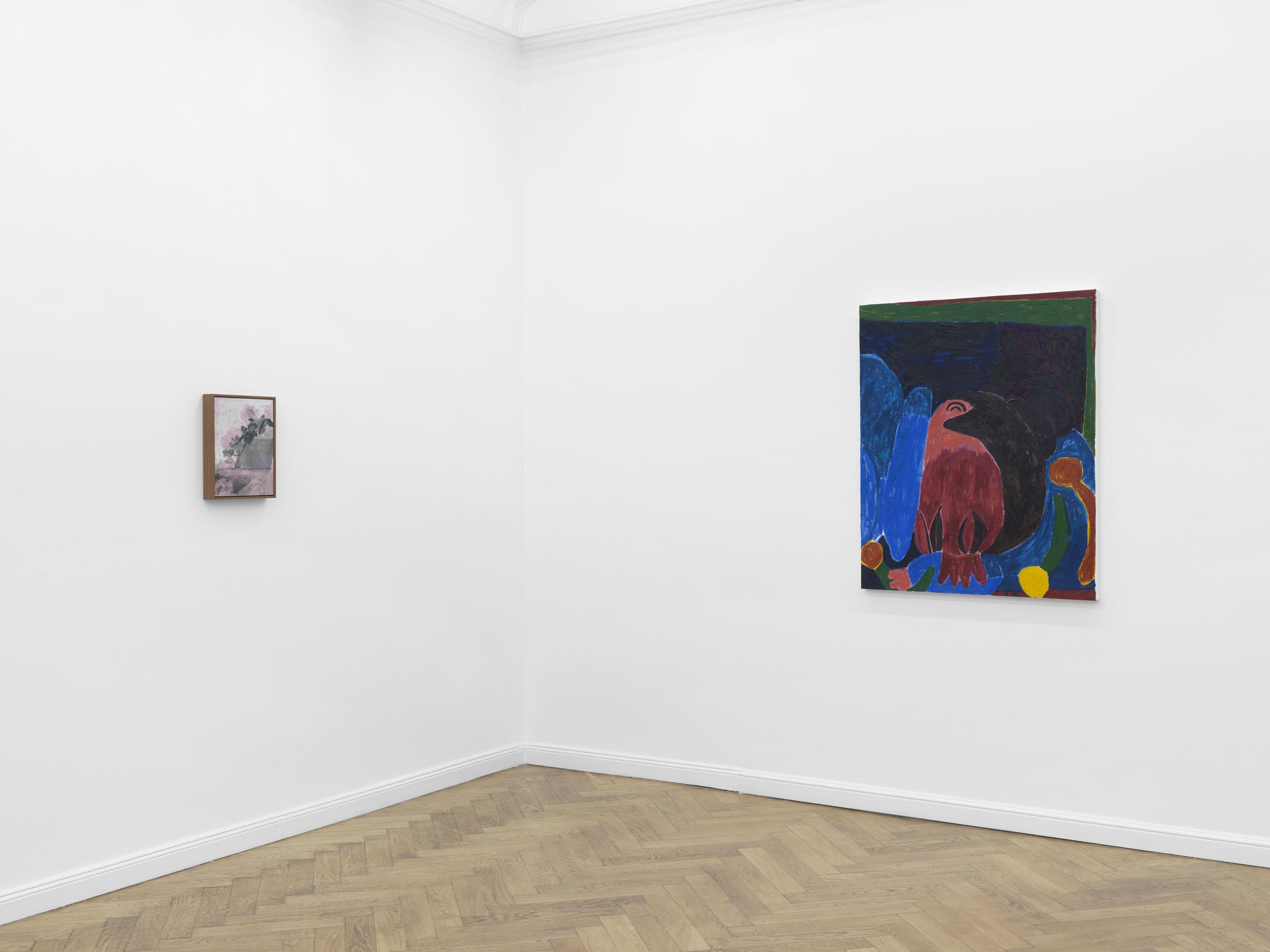
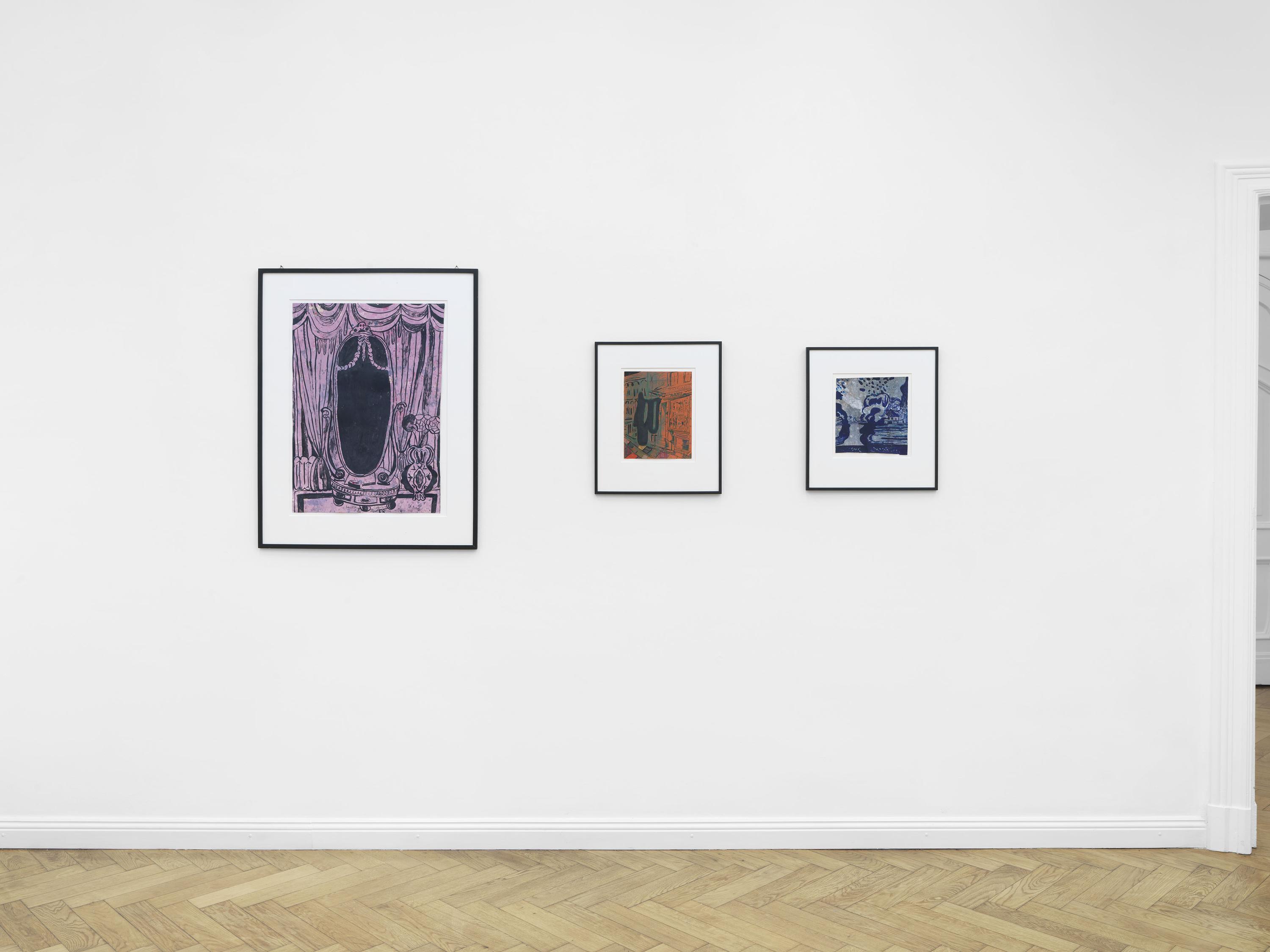
Der in Israel geborene dänische Maler Tal R ist für eine unverwechselbare, kraftvolle Bildsprache bekannt, die Einflüsse von Art Brut und Volkskunst mit dem Expressionismus, Symbolismus und Fauvismus verbindet. Das Sammelsurium seiner visuellen Quellen beschreibt der Künstler selbst mit dem hebräischen Wort ›Kolbojnik‹, was übersetzt ›Reste‹ bedeutet. In der Arbeit ›Mirror‹ umrahmen plüschige Vorhänge einen verzierten Spiegel, dessen Reflexion geheimnisvoll zugemalt ist. Auch in ›Antique‹ scheint etwas überblendet oder zensiert: Eine schaurige, zähflüssige Leere baumelt direkt neben der Schaufensterauslage eines Antiquitätengeschäfts.
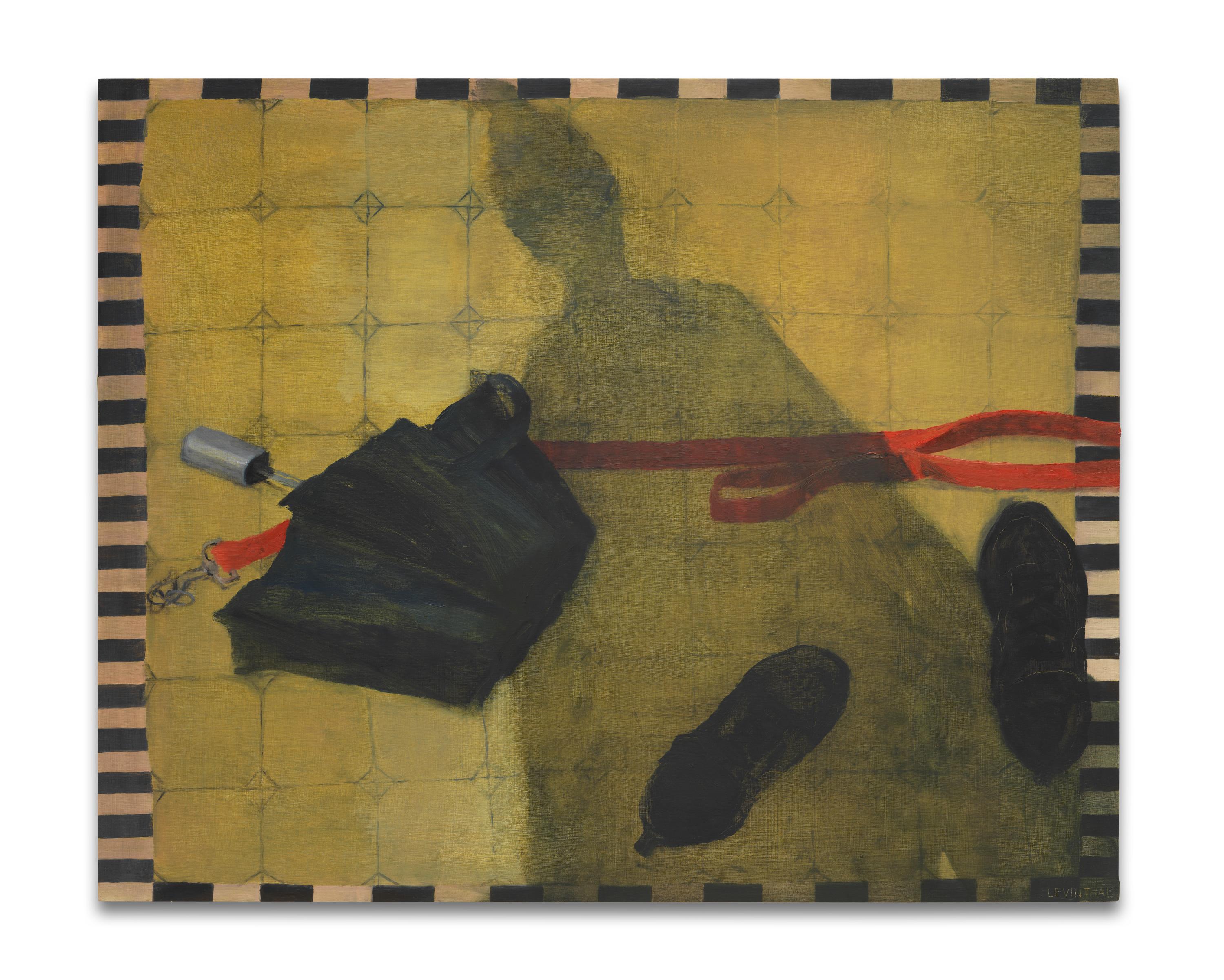
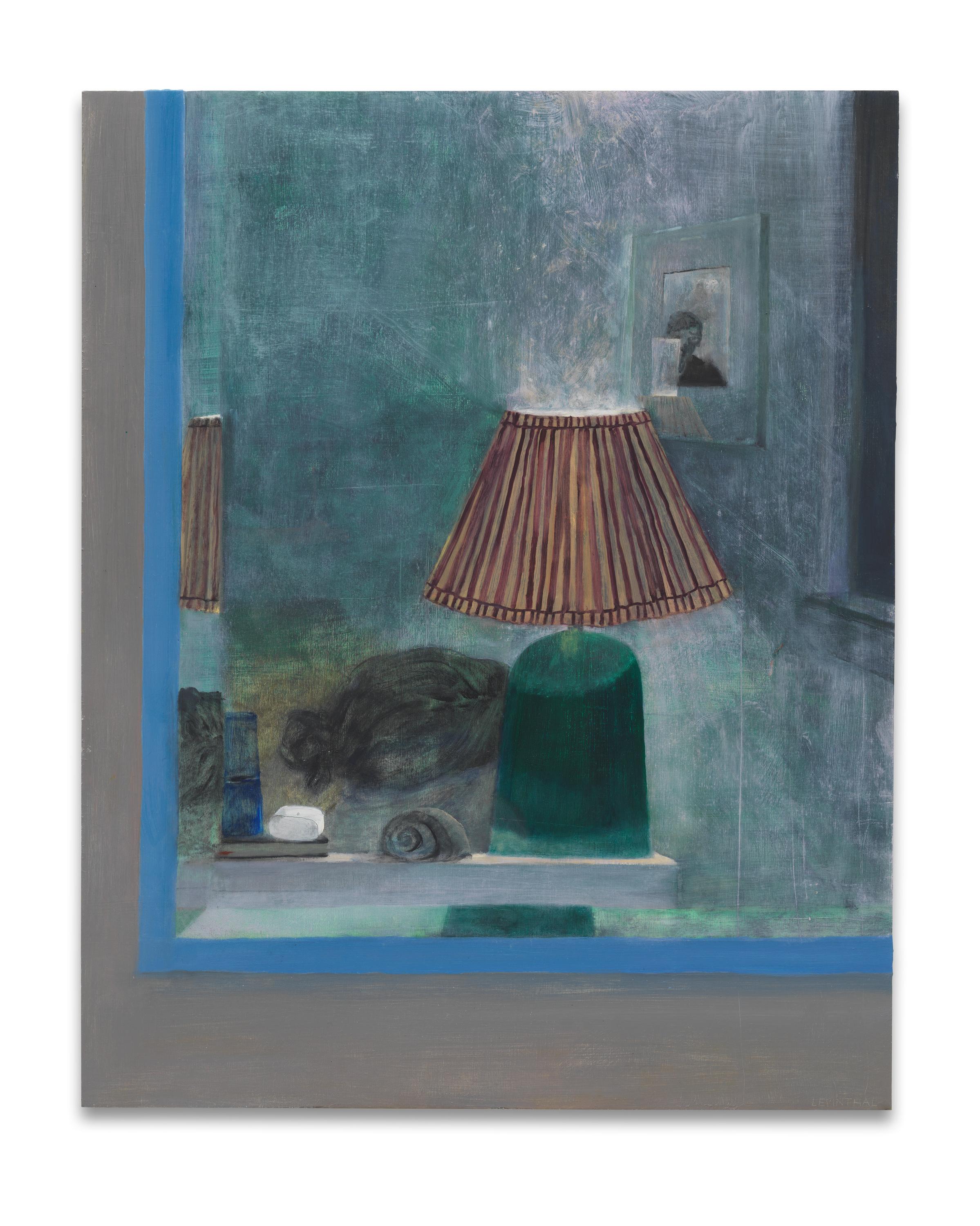
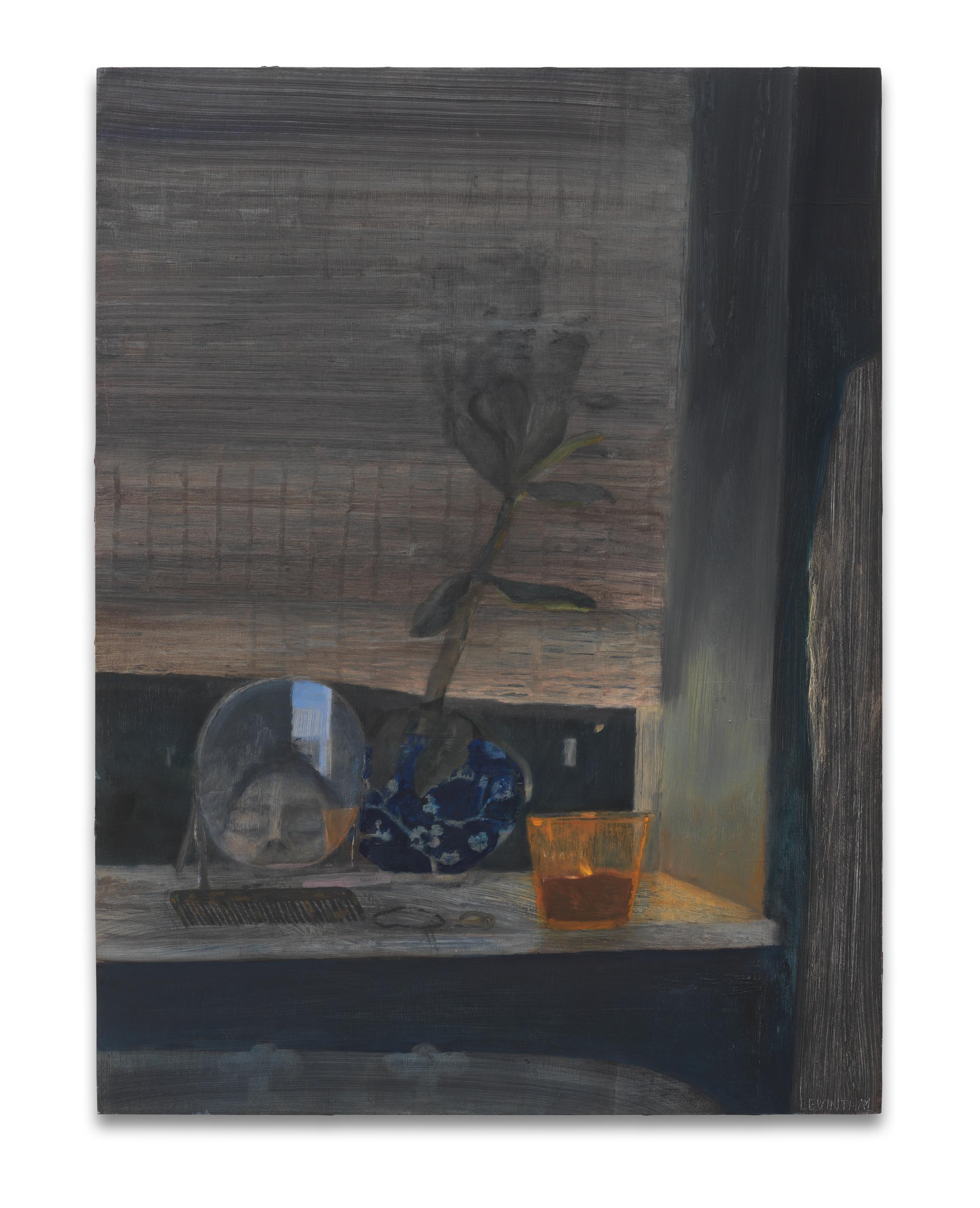
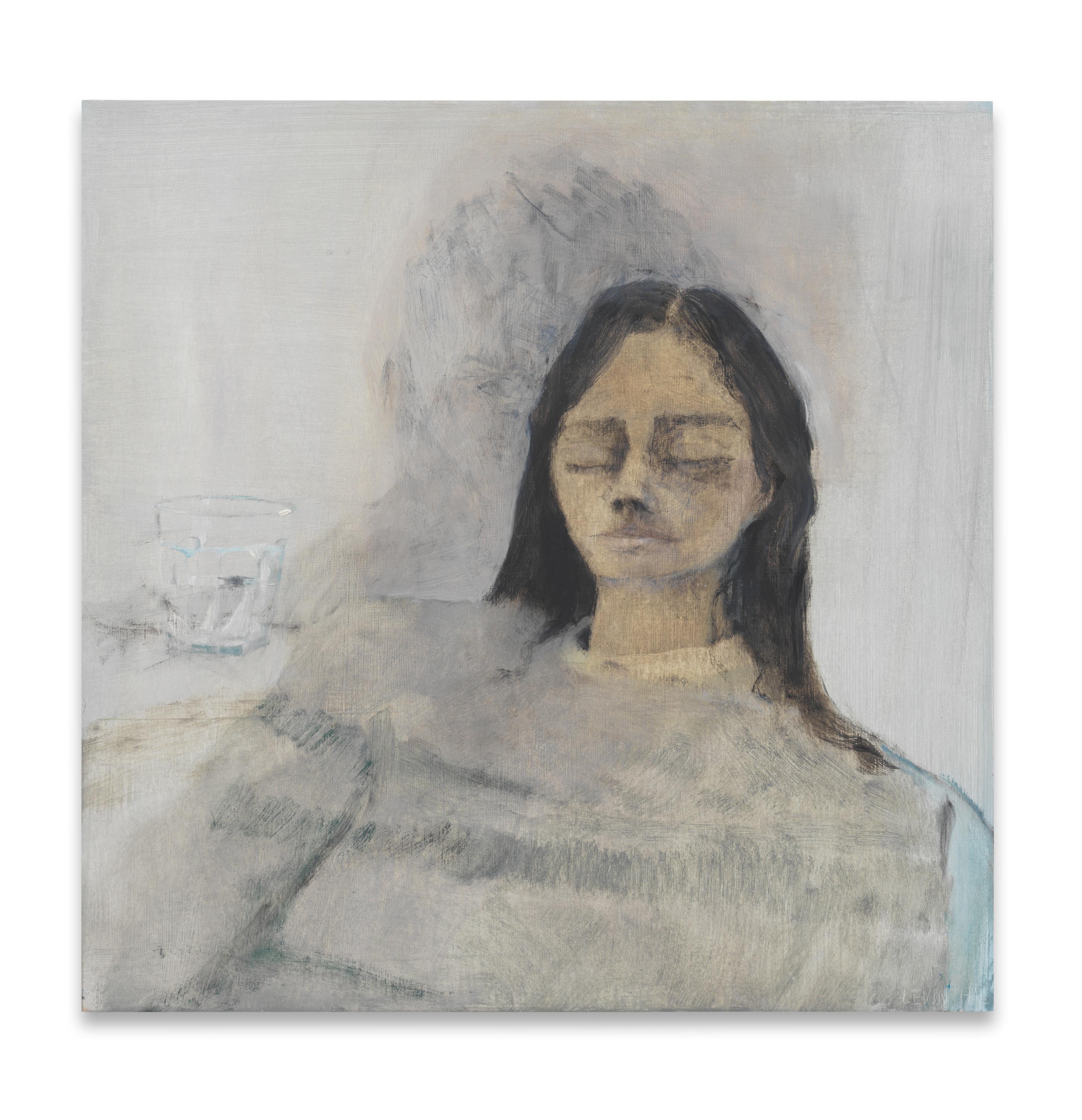
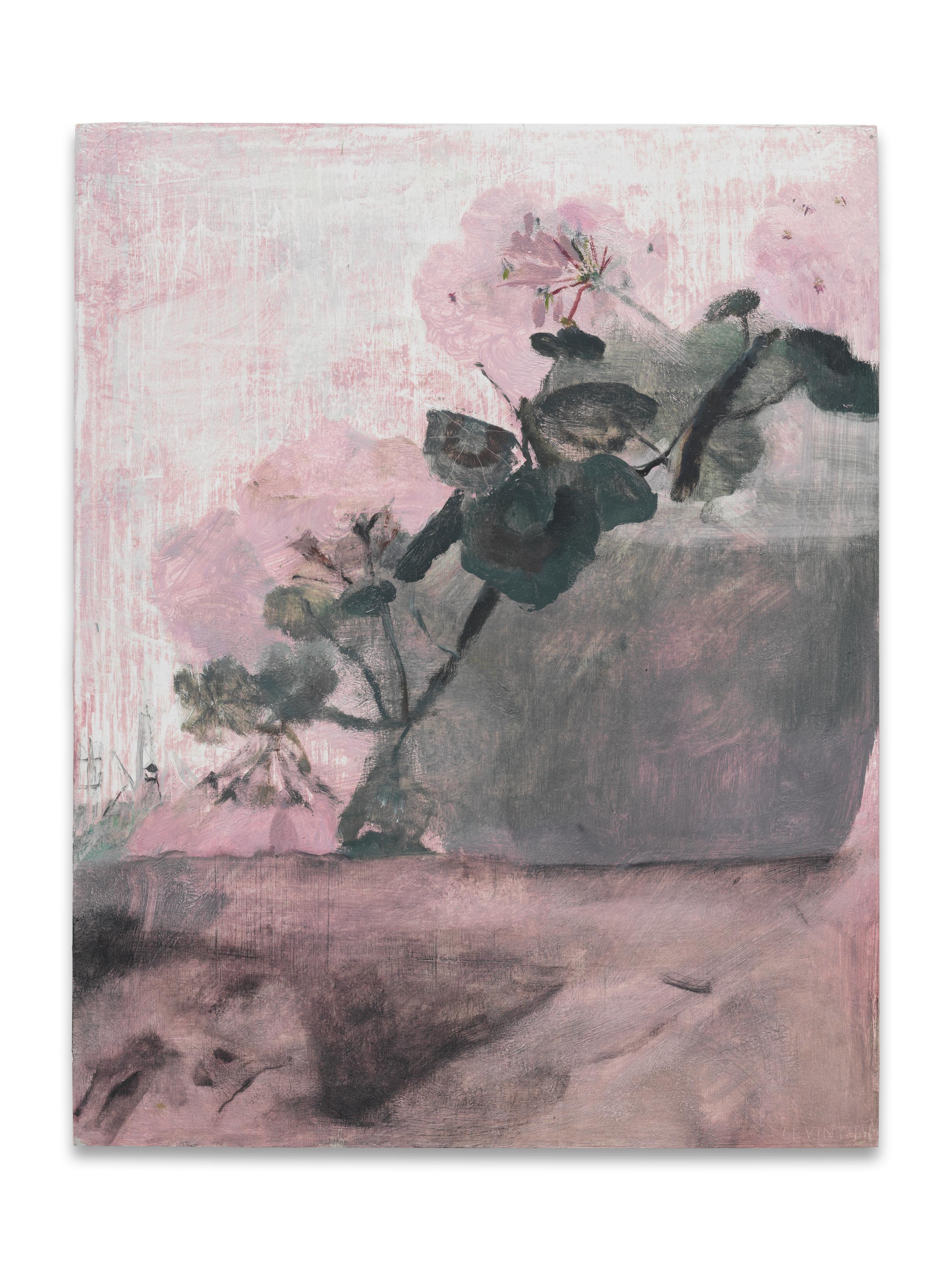
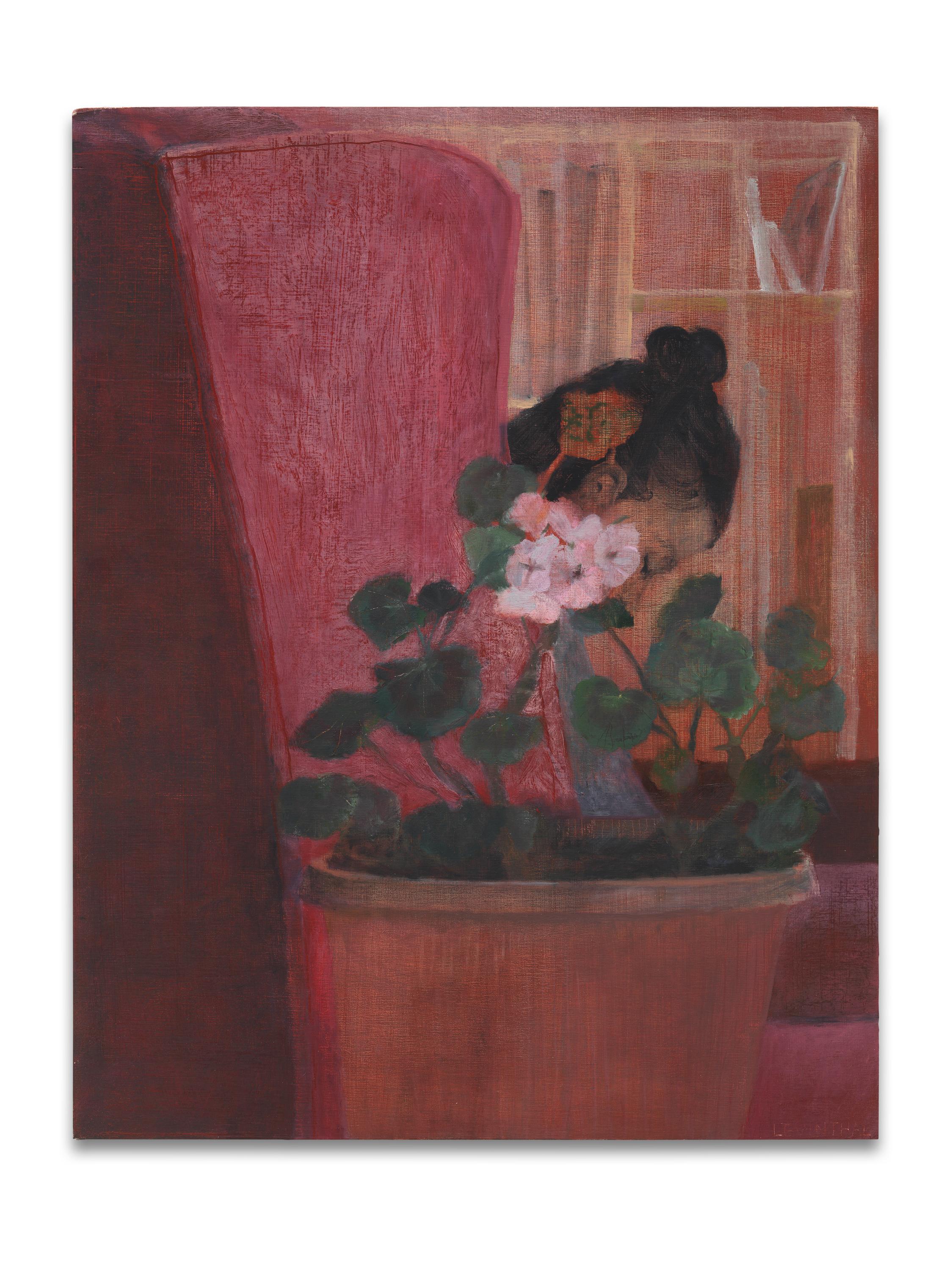
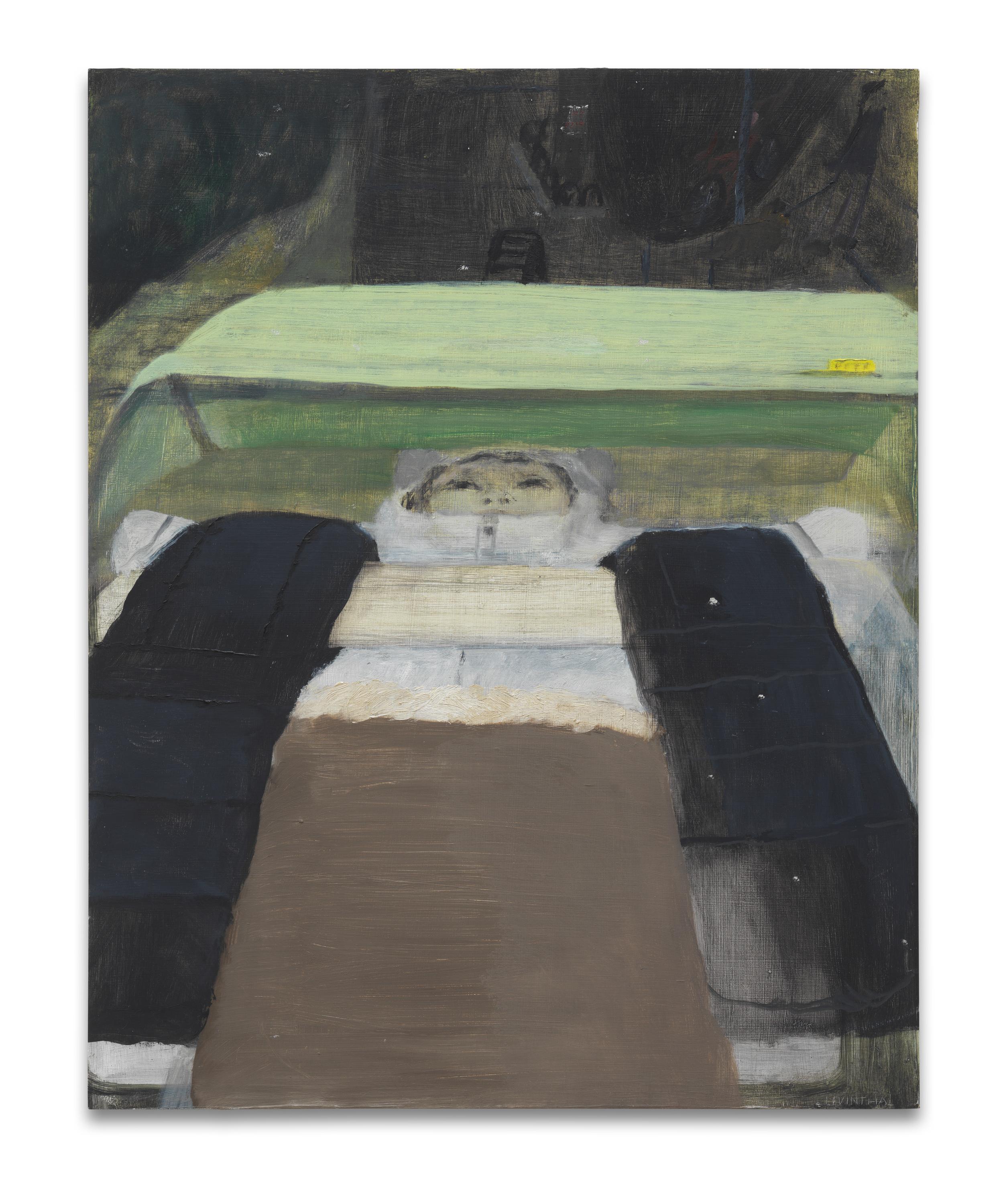
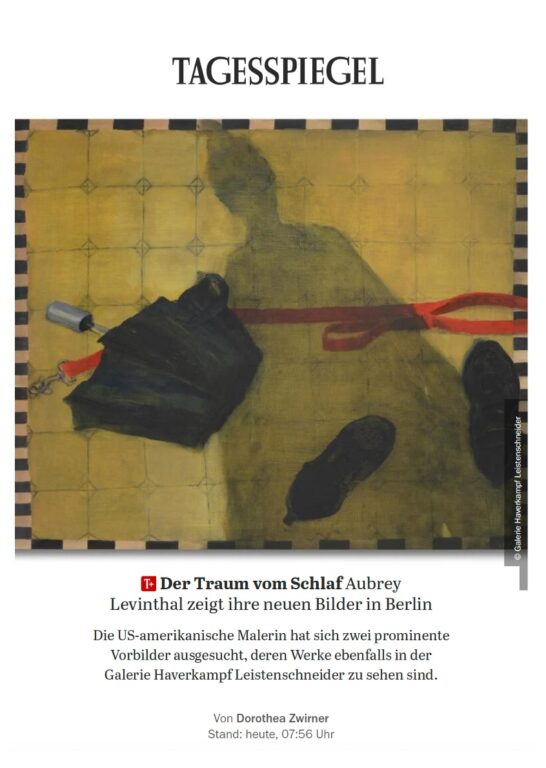
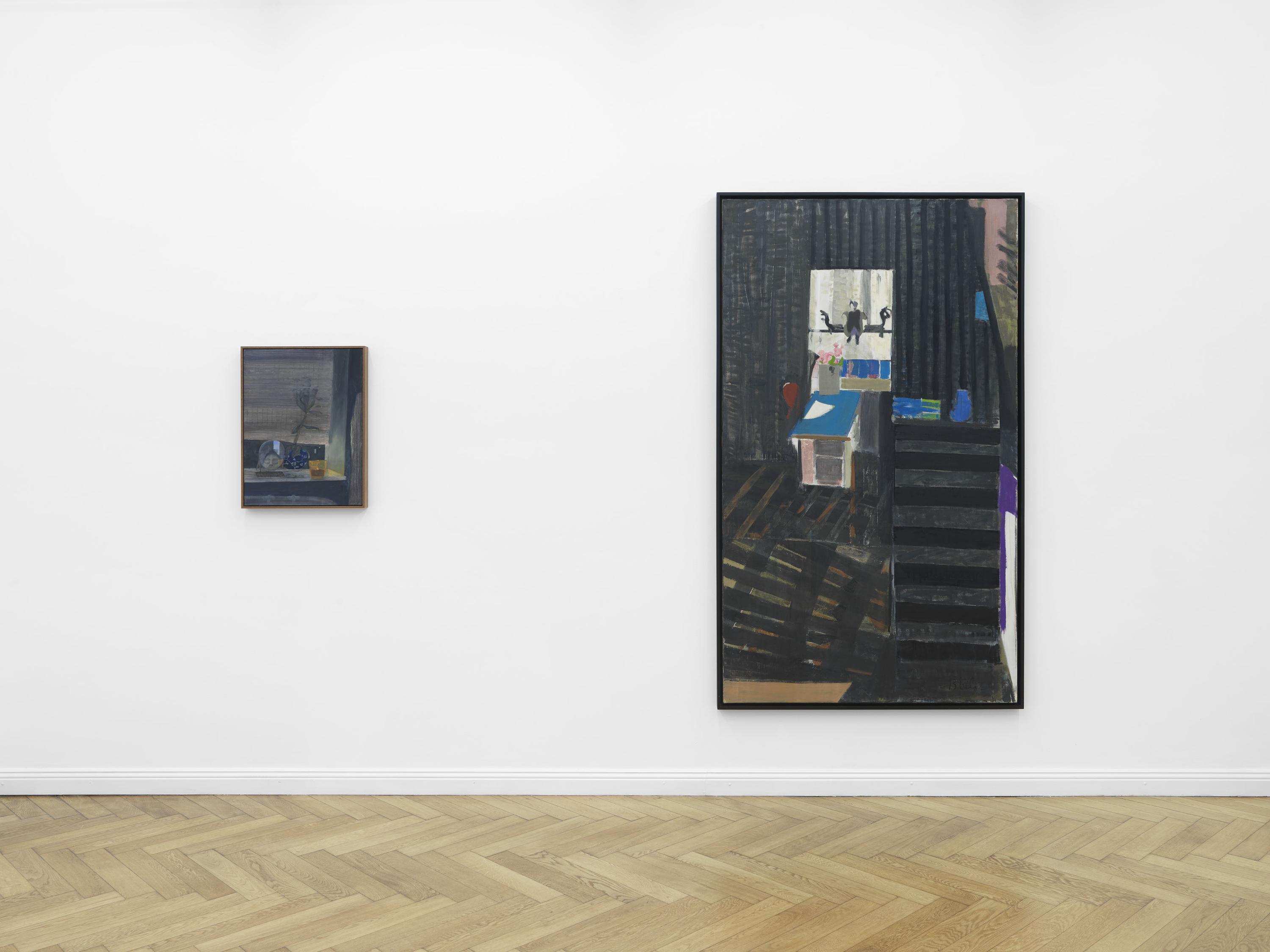
Die US-amerikanische Malerin Aubrey Levinthal malt aus dem täglichen Leben und hält dabei eine feine Balance zwischen Melancholie und Wärme, Gemeinschaft und Isolation. Ihre Figuren sind oft Frauen, die sich ebenso nah wie distanziert und unerreichbar anfühlen—versunken in Gedanken, schlafend oder bei alltäglichen Erledigungen. In dieser neuen Werkgruppe spielt sie mit dem Blick, indem sie ihn durch Fenster wandern lässt, durch einen Strauß Geranien oder fragmentiert durch Spiegelungen. Figuren sind in engen, angeschnittenen und versunkenen Räumen eingeschlossen. Wir befinden uns nie ganz im Raum, sondern blicken von einem anderen, unbestimmten Ort hinein. In ›Summer Mirror with Woman’s Head‹ harmoniert der Haarknoten einer ruhenden Frau mit dem spiralförmigen Wirbel einer Muschel, was eine seltsam eindringliche Wirkung erzeugt. Wie Anne Carsons Traum vom schlafenden Wohnzimmer scheint das Bild kurz davor zu stehen, sich umzudrehen und ein vorenthaltenes Geheimnis zu offenbaren. Man fühlt sich an die wiederkehrende Vision von Madeleines hochgestecktem Haar in Hitchcocks ›Vertigo‹ erinnert—das Verlangen, in dieses Bild hineinzugreifen, etwas von seiner ›anderen Seite‹ herauszuziehen, und gleichzeitig das Wissen, dass dahinter vielleicht nicht mehr steckt als die betörende Wirkung eines kleinen Zufalls.
Die Ausstellung bietet dem Publikum nicht nur einen tiefen Einblick in den künstlerischen Denkprozess von Aubrey Levinthal und beleuchtet direkte Inspirationsquellen für eine jüngere Malergeneration; sie gibt auch einer Künstlerin wie Biala, die Europa 1939 als in Polen geborene jüdische Einwanderin verlassen musste, ihre künstlerische Präsenz und Sichtbarkeit zurück. Ihre Gemälde hallen im Kontext der zeitgenössischen Malerei und der weiblichen Subjektivität von heute weiterhin nach.
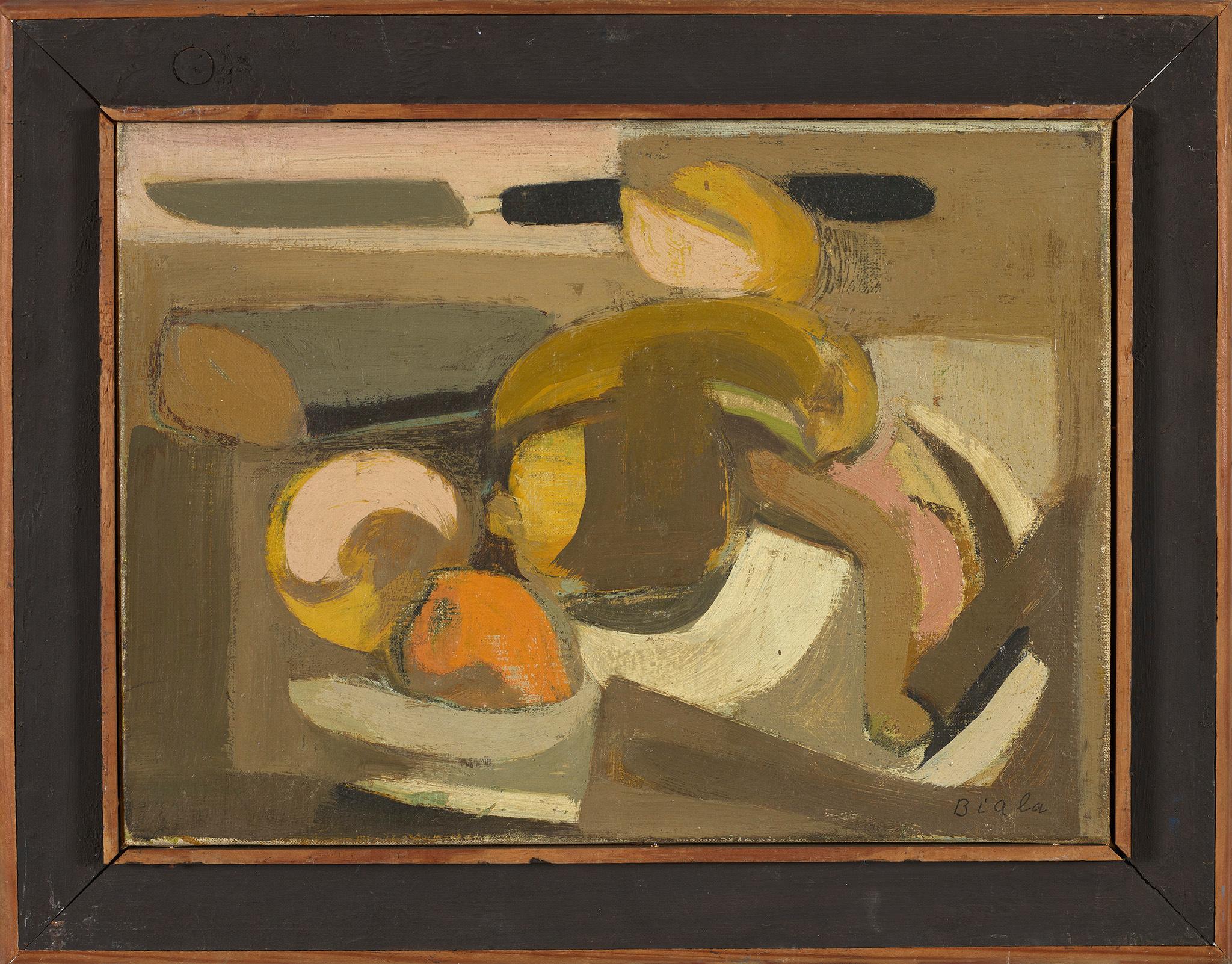
Bialas Werk wurde bislang nur einmal in Berlin ausgestellt, und zwar 1966 im Amerika-Haus in Berlin in der Gruppenausstellung ›10 Américains de Paris‹. Ihr Bild ›Untitled (Three Glasses)‹ von 1962 wurde zwar 2022 im Museum Barberini in Potsdam im Rahmen der Ausstellung ›Die Form der Freiheit. Internationale Abstraktion nach 1945‹ gezeigt, in Berlin selbst ist dies jedoch mit dieser Ausstellung nach genau 60 Jahren eine Premiere.
Public Opening:
Donnerstag, 10. September 2026, 18:00 – 22:00 Uhr
Aubrey Levinthal wird zur Eröffnung anwesend sein.
—
On the occasion of this year’s Berlin Art Week, the exhibition From the Sleep Side presents a cross-generational and transcontinental survey of three artists, placing contemporary figurative painting in a historical dialogue. It focuses on new works by the US American artist Aubrey Levinthal (b. 1986) whose recent paintings are placed in a direct visual and thematic relationship with works by Biala (Janice Biala, 1903—2000) and Tal R (b. 1967), both of whom serve as significant points of reference and sources of inspiration for Levinthal.
The poet Anne Carson once described a disorienting dream about entering her living room at night to find all the lights on. Nothing was wrong, everything was in its usual place, »and yet it was utterly, certainly, different«. Later, she explains the strangeness of the dream to herself by deciding that she must have »caught the living room sleeping. I had entered it from the sleep side«. In this selection of paintings by Aubrey Levinthal, Biala, and Tal R, a similar sensation is at work—that there is some furtive other ›side‹ to the rooms and objects that we live among; that the secret lies just beyond the ordinariness of what we see. The works gathered here play at the thin membrane between the utterly familiar and the utterly strange. Tensions are formed between the tactile proximity of intimate, homely spaces and the cryptic distance of closed eyes and mirrors painted shut.
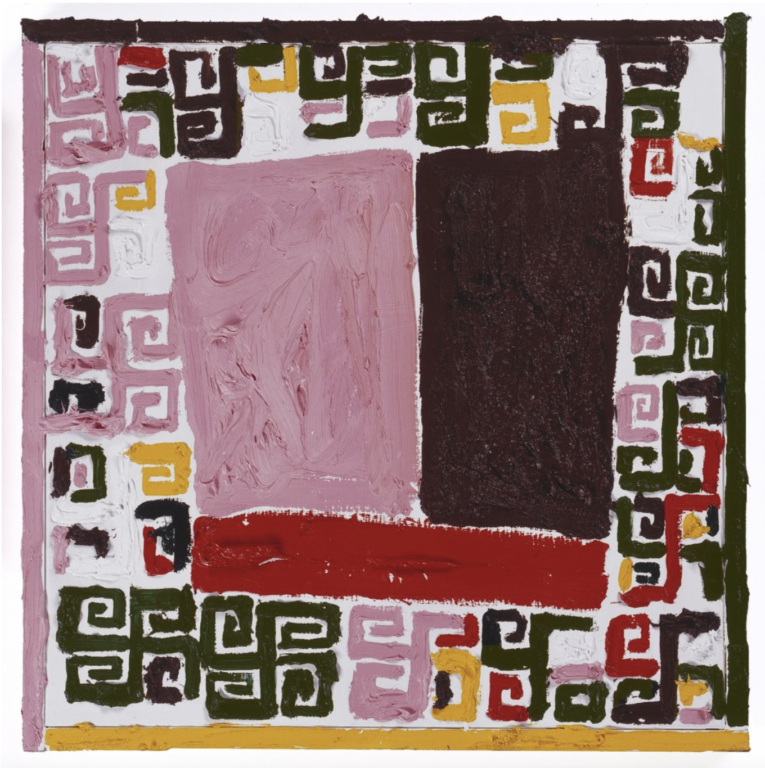
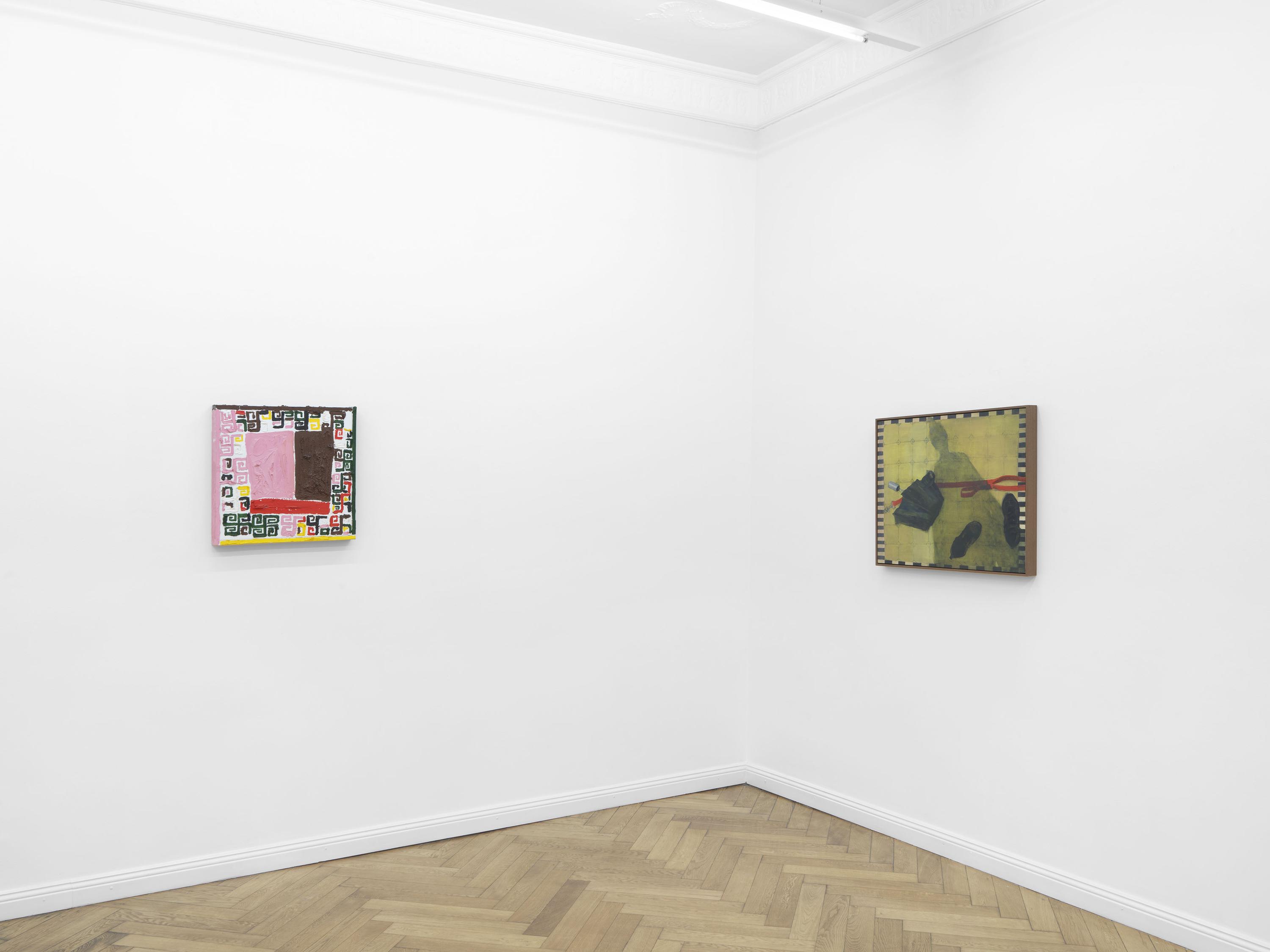
Thematically, the exhibition revolves around a paradox: how does the strictly private become universally applicable, and how do painters of different generations approach this challenge? The three artists share an affinity for the subtle loosening and disorienting of seemingly familiar situations. For Biala and Levinthal, this often occurs through the unexpected slanting or flattening of perspective in still lives and domestic scenes. Shelves, windowsills, tables, and tiled floors tilt sharply upwards to meet your gaze—their objects oddly suspended among this altered geometry—or slope away into shadowy void-space. In Tal R’s brightly coloured, cartoon-like paintings and his abstract ›Milk versus Beef‹, lines and angles stray, space feels soft, malleable, dreamlike.
Biala was a Jewish, Polish-born American artist celebrated for bridging a transatlantic dialogue between European Modernism and the New York School of Abstract Expressionism. Her renderings of space, light, and surface feel lived-in—intimate and tactile, but with a gentle instability that speaks to the motion and relationality of things in the world: the circulation of objects through rooms, picked up, put down, moved around a house by the lives that live among them. In ›Black Still Life with Artichokes‹, pots and cups seem barely held together, their forms and colours half-adrift. In ›Standing Figure (Girl with Slatbacked chair)‹, a woman’s pose is full-frontal yet enigmatic—smile and hands on the brink of spectral dissolve.
Tal R is an Israeli-born Danish painter, known for a distinctive, bold visual language that combines influences from Outsider and Folk art, Expressionism, Symbolism, and Fauvism. The artist himself uses the Hebrew word kolbojnik, or ›leftovers‹, to describe the medley of his source material. In ›Mirror‹, plush curtains surround an ornate mirror, its reflection painted mysteriously shut. In Antique, too, something appears painted out or censored: a ghoulish, viscous negation dangles beside the window display of an antique store.
The US American painter Aubrey Levinthal paints from daily life, maintaining a delicate balance between melancholy and warmth, community and isolation. Her figures are often women, and often as close-seeming as they are distant and unreachable, absorbed in thought, sleeping, or daily errands. In this selection of new paintings she plays with the gaze, sending it through windows, through a bunch of geraniums, fragmented through reflections in mirrors. Figures are enclosed in close, cropped, and sunken spaces. We are never quite in the room, but looking in from some other, indistinct place. In ›Summer Mirror with Woman’s Head‹, a resting woman’s bun of hair rhymes with the spiralled fist of a seashell and the effect is strangely haunting. Like Anne Carson’s dream of the sleeping living room, it seems on the verge of turning to reveal some withheld secret. One could recall the repeating vision of Madeleine’s coiled hair in Hitchcock’s Vertigo, the desire to reach into this image, draw something out from its ›other side‹—and at the same time, the knowledge that there is maybe nothing more to it than the bewitching effect of small coincidence.
The exhibition not only offers viewers a profound insight into Aubrey Levinthal’s artistic thought process and highlights direct sources of inspiration for a younger generation of painters; it also restores an artistic presence and visibility to an artist like Biala, who was forced to leave Europe in 1939 as a Polish-born Jewish immigrant. Her paintings continue to resonate powerfully within the context of contemporary painting and female subjectivity today.
Biala’s work has been exhibited only once before in Berlin in 1966 at the Amerika-Haus in Berlin in the group exhibition ›10 Américains de Paris‹. Although her 1962 painting ›Untitled (Three Glasses)‹ was shown in 2022 at the Museum Barberini in Potsdam as part of the exhibition ›The Shape of Freedom: International Abstraction after 1945‹, this current exhibition marks a premiere in Berlin itself after exactly 60 years.
Public Opening:
Thursday, September 10, 2026, 6 pm – 10 pm
Aubrey Levinthal will be present for the opening.
.
Image: Janice Biala (1903-2000), Black Still Life with Artichokes, 1986, Oil on canvas, 32 x 39 3/8 inches, 81.3 x 100 cm © 2023 Estate of Janice Biala / Licensed by Artists Rights Society (ARS), NY; Courtesy Berry Campbell, New York.